São Miguel, Azores: A 4-Day Spring Travel Guide
Everything we did, what worked, what surprised us, and what you shouldn't skip.
4/26/20266 min read
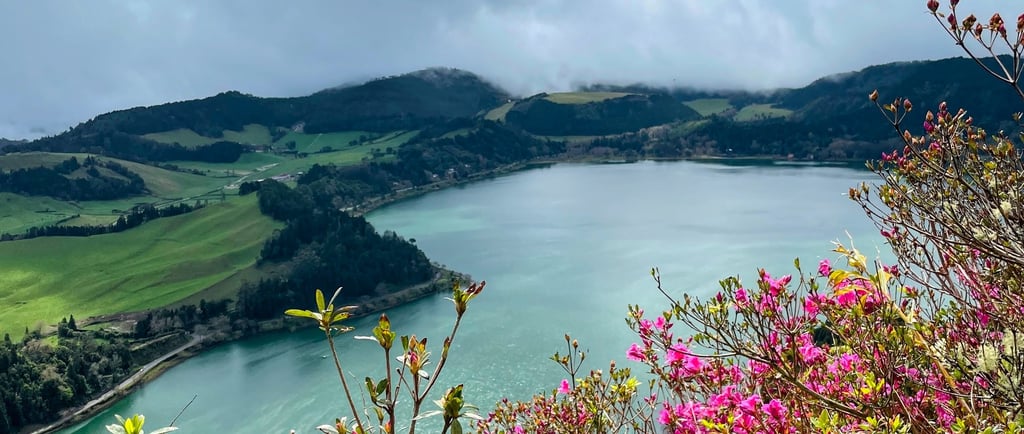
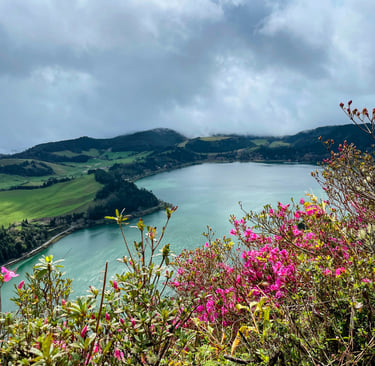
We flew direct from Toronto to São Miguel — which, honestly, felt like too good a deal to pass up. A non-stop flight straight into the middle of the North Atlantic, landing on a volcanic island covered in crater lakes and hot springs? Yes please.
This is our full four-day breakdown: what we saw, what we'd do differently, and all the practical things we wish we'd known before going. We loosely followed Geeky Explorer's local São Miguel guide (it is very well written by a local) and highly recommend it as a companion to this post.
Before You Go: The Basics
Direct flights from Toronto to Ponta Delgada exist — and they're a genuine perk. No layover, no fuss
Rent a car from the airport. The island is not explorable without one. Book in advance, especially in spring and summer.
Stay somewhere central. We chose Areal de Santa Bárbara Guest House in Ribeira Grande and it was perfect — great breakfast, easy access to all four corners of the island, and reasonably priced
The weather is unpredictable. Pack layers and embrace it. We visited Lagoa do Fogo three separate times before we finally got a clear view — more on that below
If this itinerary feels packed, spread it over 5 days instead of 4 days and it would be enough.
Day 1 — Landing, Driving & Finding Your Feet
We landed, grabbed our rental car, and immediately felt the shift. The drive from the airport into the island's interior is already beautiful — green hills, ocean glimpses.
Our first stop was a whale watching tour with Terra Azul, and we'd recommend them without hesitation. They're known for being one of the more ethical operators on the island — smaller boats, knowledgeable guides, genuine care for the animals. We saw a lot of dolphins (mother and baby swimming together) and just a glimpse of a whale (they tried very hard but nothing is guranteed in the nature). It was still surreal. We also saw Vila Franca Islet from the boat.
From there, we then attempted Lagoa do Fogo — keyword: attempted. The lake sits at one of the island's highest points. We saw the lake, but it was partially covered in clouds. We'd be back. There is also a trail that goes to the lake, but we didn't do it. During the summer, rental cars are not allowed, and you need to take a shuttle, so verify before you go.
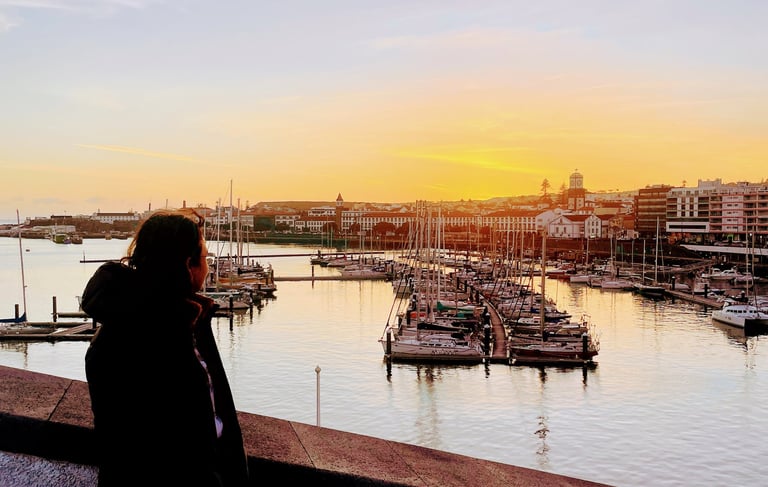
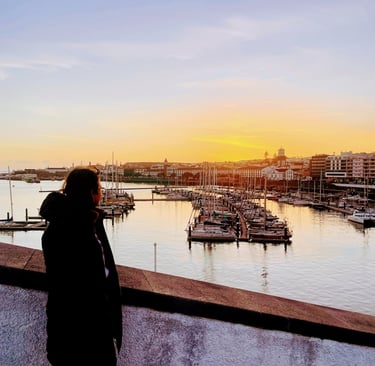
We ended the afternoon in Ponta Delgada, the capital. It's a genuinely charming city — monochrome volcanic stone mixed with brightly painted buildings and intricate mosaic sidewalks, the iconic triple-arched Portas da Cidade gates on the waterfront. We wandered the city center, had dinner, and called it a night.
Tip: Don't try to rush Day 1. Between the flight, the drive, and the adjustment to the island's pace, less is more.
Day 2 — Furnas: Where the Earth Does the Cooking
Day 2 was our Furnas day and it ended up being one of the most memorable of the whole trip.
We started at Miradouro da Lagoa das Furnas, a quiet viewpoint overlooking the Furnas lake. Calm, unhurried, beautiful — a gentle intro to the valley.
One more stop: the Nossa Senhora das Vitórias church, a striking Neo-Gothic building right on the edge of the lake. Worth a quick visit.
Then down into Caldeiras das Furnas, the geothermal park where steam vents and boiling mud pools break through the earth's surface. The sulphur smell hits you before you even park.
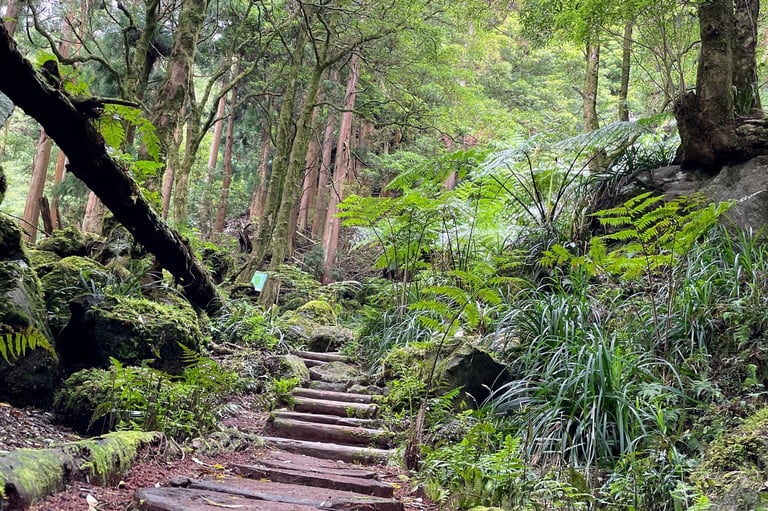
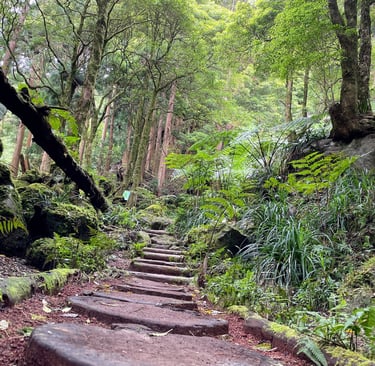
From there, we did hike in Parque da Grená, which leads through the forest to a waterfall and a natural bathing pool. You need to pay but do not skip this. It's one of those places that doesn't make it onto every tourist list but absolutely should. Just know there are no washrooms on the trail — plan accordingly.
We stopped at the Pico do Ferro viewpoint for elevated views over the valley, then spent the rest of the afternoon at Terra Nostra Park. It's part botanical garden, part thermal pool complex — the famous orange-tinted iron-rich pool sits at the centre of it. Leave a few hours here. The gardens alone are worth it.
In the late afternoon: Farol do Arnel, a beautiful lighthouse on the northeastern tip of the island. Important note: the road down is very steep and narrow. Do not take the car. It is also very steep to walk so take some water.
We finished the day at Miradouro da Ponta do Sossego (beautiful flower gardens) and Miradouro da Ponta da Madrugada — two viewpoints that look out over the Atlantic. Peaceful and dramatic at the same time.
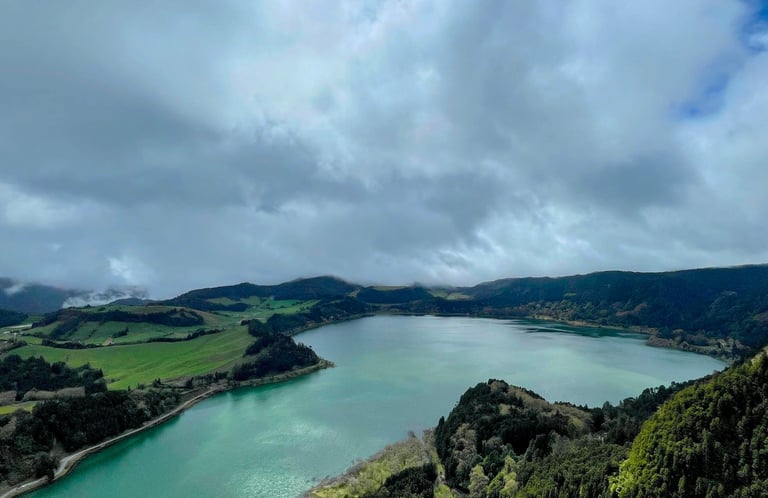
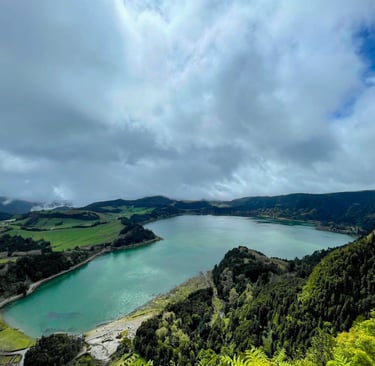
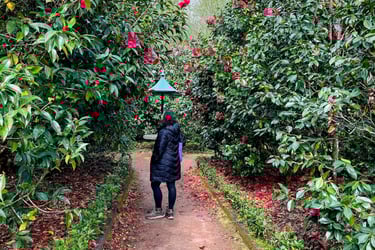
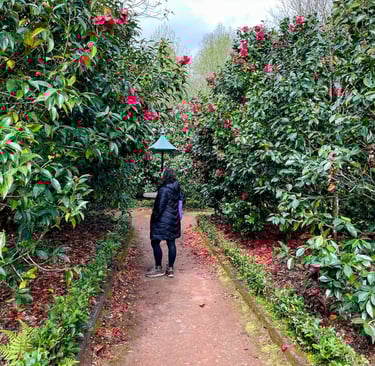
Miradouro do Pico do Ferro
Beautiful gardens in Terra Nostra Park
Hike in Parque da Grená
Day 3 took us to the northeastern part of the island, which feels quieter and wilder than the rest.
We started with the Salto do Prego hike — a lush, green trail through forest that ends at a waterfall. The vegetation is dense and dripping, almost jungle-like. It's one of the most beautiful hikes on the island. One honest heads up: there are no washrooms anywhere on this trail. Sort that out before you start. There are other hikes as well we did not enough time to do other ones.
Then Caldeira Velha hot spring — and please, book in advance, and be on time. The thermal pool are surrounded by lush greenery and gaint tree ferns all around it. At the end there is a waterfall with natural pools. We liked this hot spring better than the Terra Nostra as this had more greenery around, but they are very strict about the timing so take that into consideration.
We stopped at the Gorreana Tea Plantation for lunch. The food court there was a nice surprise — much better than expected — and you can walk through the actual tea fields and see the facility. It's the only tea plantation in Europe and it shows in how proudly they run it.
Then to windup the day and spend time in solace we went to Lagoa do Congro, the quiet and underrated.And then — finally, on Day 3, our third attempt — we stopped at Lagoa do Fogo on the way back and the clouds had cleared. It was worth every failed attempt. If it's foggy when you visit: go back. It's that good.
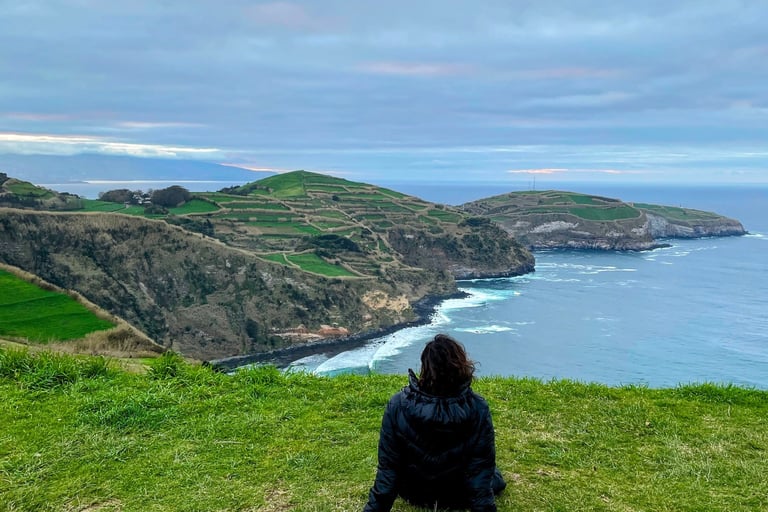
Then a quick stop at Miradouro de Santa Iria before heading back along the north coast past Areal de Santa Bárbara, a beautiful black sand beach near our guesthouse.
Day 3 — The Northeast: Hiking, Hot Springs & Tea
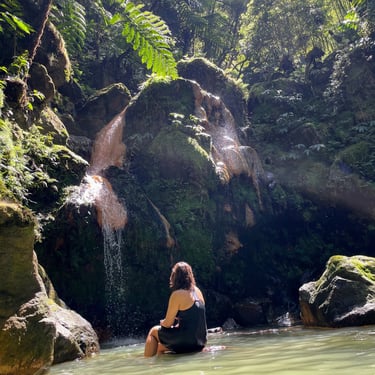
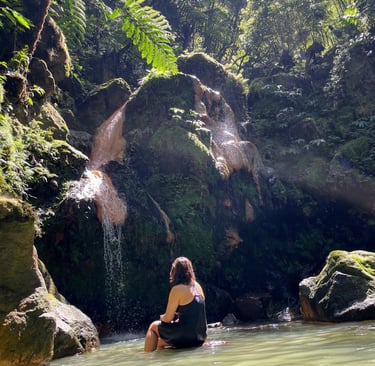
Caldeira Velha waterfall
Miradouro de Santa Iria
Day 4 - Sete Cidades, Volcanic Jewellery
The final day — and the one we'd been saving for the best weather.
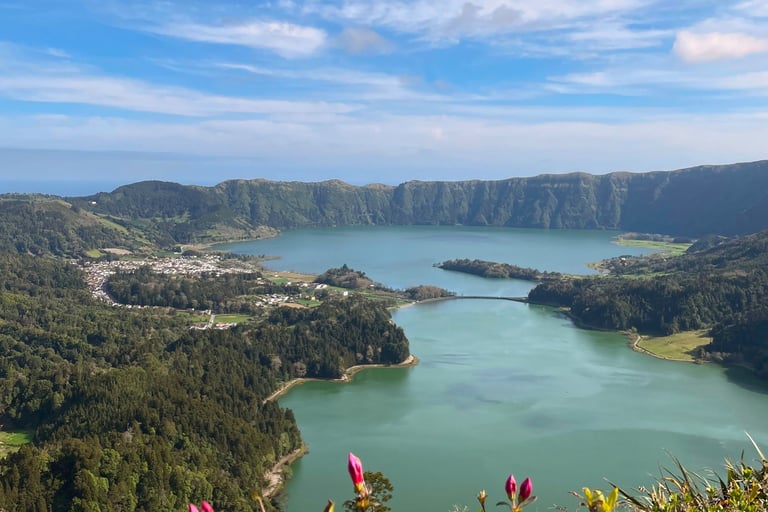
We started at Vista do Rei viewpoint, the classic panoramic view over the Sete Cidades crater lakes. One green, one blue, sitting side by side inside an ancient caldera. Get there early — the difference between 8:30am and 10:30am in terms of crowds is significant.
On the road down from the viewpoint to the lake there's a small vendor selling jewellery from volcanic stone and silver. We bought a couple of pieces and they're now some of our favourite souvenirs from any trip we've ever taken. Don't drive past without stopping. There are a couple of view points on this all worth a quick stop.
From there: Lagoa das Sete Cidades at lake level, followed by the Canario Lake to the dramatic Boca do Inferno viewpoint, and then down to Ferraria for a swim in the natural ocean pool. Timing matters here — plan to reach the parking around low tide by the time you change and get ready the water will not be as hot , but know that even 1.5 hours after low tide it can get wavy. We found it exhilarating but it's worth knowing the water moves. Someone helped us out when the waves picked up — the locals are lovely.
Afternoon stops: Canário Lake, the quiet and underrated Lagoa do Congro. It has a decent parking but at the end there are big pot holes on the unpaved road so be careful while drivning
The last stop of the trip was Jardim Botânico da Ribeira do Guilherme for a peaceful wander there were waterfall, river and nature all around.
Vista do Rei viewpoint
What you could do if you have more time:
Spend more time hiking in the Nordeste region.
If the weather permits, book in advance for the Vila Franca Islet tour to disembark on the Islet and enjoy its natural pool for about 3 hours.